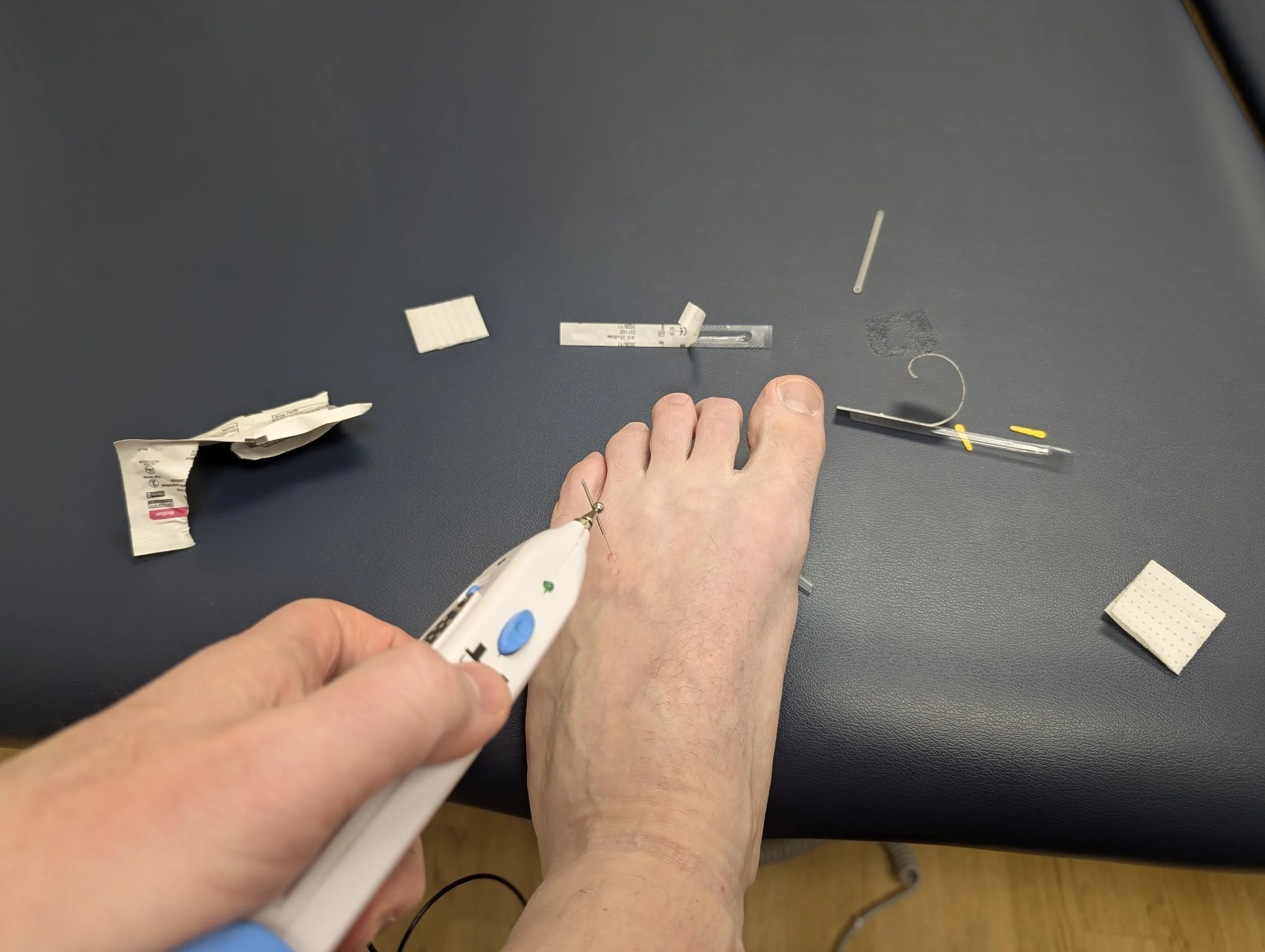
Rehab without dogma. Clinical reasoning without fluff.
If you’ve ever followed a plan and felt it didn’t quite add up, you’re not alone. Many therapists sense the gap between what we say and what actually makes mechanical and physiological sense. This is for the ones who are done ignoring that discomfort — and ready to think more clearly about pain, performance, and progression.
The Clinical Reasoning Lab
Clinical Reality is independent, evidence-based website with the objective to educate clinicians and patients. We question trends, test ideas against real practice, and translate research into what actually holds up in the clinic.
If you value thinking over following, you’re in the right place.
Join us and support independent, evidence-based education.
Donations are $5, you can chose one-time or monthly; you can increase your donation by selecting multiples of 5. Thank you.
The middle tier isn’t about “supporting the creator.”
It’s about access.
Detailed breakdowns.
Deeper clinical frameworks.
The stuff that doesn’t fit into a spicy post without breaking Instagram.
And yes — exclusive forum access.
Meaning:
• Real case discussions
• Actual clinical problem-solving
• Direct interaction instead of comment-section chaos
• Other professionals who care enough to be in the room
You’ll get the deeper dives.
The decision trees.
The conversations that make you better instead of louder.
It’s not mandatory.
But if this content has sharpened you in clinic, this is where the serious people hang out.
I provide individualized consultations for clinicians and patients seeking clear, evidence-informed solutions to complex movement, pain, and rehabilitation challenges. Sessions focus on practical assessment, clinical reasoning, and actionable strategies that translate directly into real-world outcomes. Ideal for difficult cases, second opinions, or refining treatment direction.
I built this space because I got tired of pretending the system makes sense.
In rehab and performance, we’re surrounded by confident answers, trendy interventions, and recycled protocols — yet patients are still confused, clinicians are still guessing, and outcomes are poor.
That didn’t sit well with me.
I didn’t graduate from a prestigious program. I went to a school that, many of the professors hadn’t treated a patient in years and were simply waiting on retirement. I was really frustrated during this time, but that paled in comparison to the anger I felt when I started my first job.
The gap between what I had been taught and what actually made mechanical and physiological sense was ridiculous!
The gap between protocols and problem-solving.
The gap between sounding competent and being effective.
The gap between explaining to a patient and confusing them.
That realization was agonizing.
But it was also clarifying.
If I wanted to meaningfully help people — our patients — I was going to have to learn on my own. I was going to have to read beyond the curriculum. Study biomechanics seriously. Question pain models. Lift. Test ideas. Admit mistakes. Rebuild my clinical reasoning from the ground up.
So I did.
My work now lives in the tension between:
rehab and strength training
research and real-world application
skepticism and practicality
I don’t care about what’s popular, but what holds up when you test it — mechanically, physiologically, and logically.
I’m not here to sell magic drills, perfect posture myths, corrective fairy tales, or nervous system buzzwords dressed up as certainty.
Most problems aren’t fixed with bigger words or fancier explanations.
They’re improved with better reasoning, appropriate dosage, and better progression.
This site is my public notebook — a place to challenge ideas (including my own), translate research and help clinicians and lifters make decisions that make sense and get patients better!
If you’re looking for comfort, there are easier corners of the internet.
If you’re looking for clearer thinking — welcome.
-the pissed-off PT
Follow me on social

Contact Me
Serious about getting better?
Let’s raise the standard.